Too Many Options, Not Enough Connection: The Real Cost of Dating in the Algorithm Age
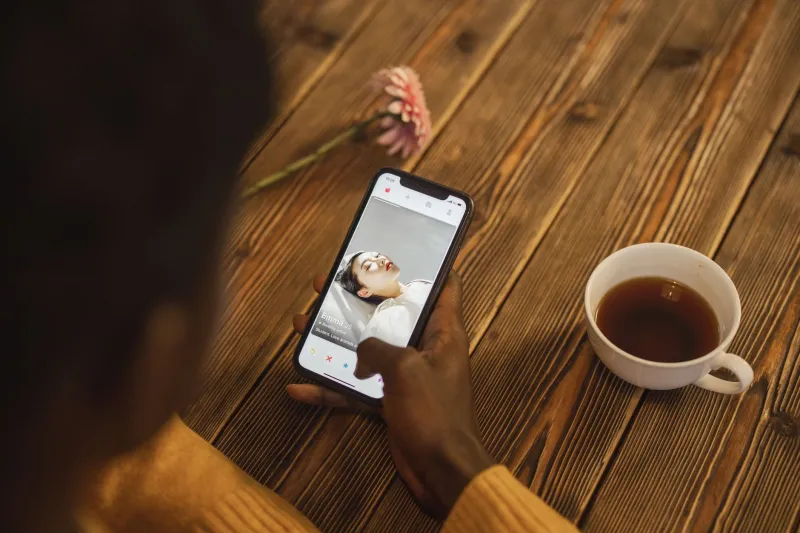
Jamila, 31, has been on Hinge for three years. In that time, she's gone on somewhere between 60 and 80 first dates, had four short-term relationships, and deleted and re-downloaded the app so many times she's lost count. "I know I should feel grateful," she says. "There are literally thousands of guys in my city I can access. But I've never felt more alone on a Saturday night."
Her experience isn't unusual. It might actually be the defining romantic condition of the 2020s.
We were sold a simple premise: more options equals better outcomes. Dating apps would function like Amazon for attraction—efficient, searchable, optimized for your preferences. What nobody fully accounted for was the psychological toll of infinite choice, the way algorithms optimize for engagement rather than compatibility, and the fundamental weirdness of trying to evaluate human chemistry through a screen before you've ever been in the same room.
The Paradox of the Infinite Swipe
Behavioral economists have a name for what Jamila is experiencing: the paradox of choice. The more options you have, the harder decisions become—and the less satisfied you feel with the choice you eventually make, because you can't shake the sense that something better was just around the corner. Barry Schwartz wrote the book on it in 2004. Nobody thought to apply it to sex and dating until apps made it unavoidable.
On a practical level, this manifests as what researchers have started calling "dating app fatigue"—a documented pattern of diminishing returns in which users become progressively less engaged, less emotionally invested in individual matches, and more likely to treat conversations as disposable. A match becomes a number. A conversation becomes a checkbox. A date becomes a transaction to be evaluated and discarded.
The apps know this. They're not designed to get you into a relationship—they're designed to keep you on the app. Every successful long-term match is, from a business model perspective, a lost subscriber. The incentive structure is fundamentally misaligned with what users say they actually want.
What "Authentic" Even Means Anymore
Then there's the performance problem. Dating profiles are, by definition, curated presentations of self. Everyone leads with their best photos, their most interesting hobbies, their most appealing personality traits. This is human nature, not malice—but it creates a gap between the person you meet on an app and the person who shows up at the bar.
That gap has gotten wider as social media literacy has increased. People are better than ever at managing their digital image, which means first impressions are more polished and less representative than they've ever been. Users report feeling frequently deceived—not necessarily by outright lying, but by the accumulated effect of everyone presenting an idealized version of themselves.
Marcus, 27, from Chicago, describes a date with a woman whose profile suggested effortless confidence and an active social life. "She was great, don't get me wrong. But she was also really anxious and kind of introverted. Which is totally fine—but it took like three dates to figure out who she actually was. And by then I wasn't sure if I was into her or the version of her I'd been sold."
This authenticity deficit is one of the primary reasons people are increasingly seeking connection through channels the apps didn't anticipate.
The Workarounds People Are Actually Using
Here's what's interesting: rather than abandoning digital platforms entirely, a lot of people are using them differently—or supplementing them with strategies that reintroduce friction and serendipity into the process.
Group dating apps like Timeleft (which matches strangers for dinners based on personality rather than photos) and social platforms like Meetup are seeing renewed interest from people who are tired of the one-on-one cold-start dynamic of traditional swipe apps. The logic is simple: meeting someone in a group context gives you more behavioral data faster, and takes the pressure off any single interaction.
Others are going analog in deliberate ways—attending in-person events specifically structured around shared interests, from rock climbing gyms to book clubs to cooking classes. The research consistently shows that proximity and repeated contact are among the strongest predictors of attraction. Apps removed those conditions; people are engineering them back in.
Some are even returning to older social infrastructure: friends setting them up, workplace connections (navigated carefully), and the kind of slow-burn acquaintanceship that apps were supposed to make obsolete. It turns out that knowing someone's vibe before you know their face is a pretty good filter.
The Sexual Dimension
For people seeking specifically sexual connection rather than romantic partnership, the landscape is equally complicated. Apps designed for casual encounters—Feeld, Pure, the less-publicized features of Tinder—offer access but not necessarily satisfaction. The same decision fatigue applies. The same authenticity gap exists. And the stakes feel simultaneously lower and higher: lower because it's "just" sex, higher because physical vulnerability is involved.
What's emerging in this space is a clearer articulation of expectations upfront. Users who report the most satisfying casual encounters are consistently the ones who communicate explicitly—about what they want, what they don't want, and what success looks like for them—before the first meeting. The apps provide the access; the communication provides the quality.
It's a skill that doesn't come naturally to everyone, and it's one the apps do almost nothing to develop or encourage. But people are figuring it out anyway, trading notes in Reddit threads, group chats, and the kind of frank conversations that happen after enough disappointing Thursdays.
Finding Signal in the Noise
The honest conclusion here isn't that dating apps are bad or that technology has ruined romance. It's more nuanced than that: the tools are powerful, but they're being used without a clear understanding of their limitations. And the people who are navigating them most successfully are the ones who treat the app as a starting point rather than a solution—who use the access they provide while actively engineering the conditions for genuine connection.
Jamila, for her part, has started limiting herself to three active conversations at a time and committing to a real date within a week or going no further. Her match volume is down. Her date quality is up. "It feels less like a game now," she says. "Which is weird, because I'm still on the same app. I just changed how I'm playing it."
Maybe that's the move. Not opting out of the algorithm—but refusing to let it play you.