The Last Taboo in the Bedroom Isn't What You Think It Is
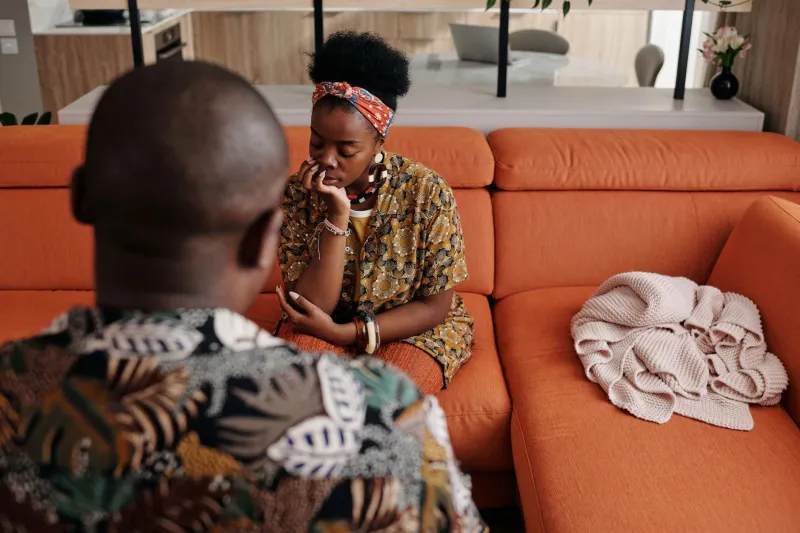
We live in an era of radical oversharing. People livestream their therapy sessions, post their salary on LinkedIn, and have heated public debates about their most deeply held political convictions with total strangers. We have, as a culture, become remarkably comfortable being uncomfortable—in almost every domain except one.
Tell me what you actually want in bed.
Go ahead. Say it out loud, to the person you sleep with most often. Be specific. Use the words. Describe the thing you've been thinking about for six months but haven't mentioned because you're not sure how it'll land.
For most Americans, that instruction produces an immediate and visceral resistance. A throat-clearing. A subject change. A vague gesture toward "I don't know, whatever you want." And this is true not just for new couples navigating unfamiliar territory—it's true for people who have been sharing a bed for five, ten, twenty years.
Sexual communication is, quietly, one of the last genuine social taboos in American life. And unlike most taboos, this one has real, measurable consequences.
Why We Can Talk About Everything Except This
The psychology here is layered. Part of it is simple vulnerability: sexual desire is intimate in a way that political opinion or financial anxiety isn't. To tell someone what you want sexually is to expose something about who you are at a fairly fundamental level—and to risk rejection of that thing, which can feel like rejection of yourself.
But vulnerability alone doesn't explain the scale of the avoidance. People disclose all kinds of vulnerable things. The specific block around sexual communication seems to have a cultural architecture built over centuries of religious shame, gender role conditioning, and the persistent cultural myth that good sex should be intuitive—that needing to talk about it means something is wrong.
That last one is particularly insidious. The "if you have to ask, it doesn't count" fallacy. The idea that truly compatible partners just know. Romance films and pornography both reinforce this fantasy relentlessly: bodies finding each other perfectly, without negotiation, without awkward pauses, without anyone ever having to say "actually, can we try it differently."
Real sex doesn't work that way. Real people don't work that way. But the myth persists, and it keeps mouths shut in bedrooms across the country.
The Progressive Blind Spot
Here's something that might surprise you: this communication gap is not significantly smaller in communities that pride themselves on progressive values, sex-positivity, or psychological sophistication. College-educated, politically liberal Americans who can discourse fluently on consent, gender, and sexual health are often just as likely to avoid direct conversations with their own partners about desire as anyone else.
The vocabulary is there. The framework is there. The follow-through frequently isn't.
Sex therapists report this constantly. Clients who can accurately define "compersion" and "ethical non-monogamy" but can't bring themselves to tell their spouse of eight years that they'd like more oral sex, or less of a particular thing, or something they've never tried. The intellectual acceptance of sexual openness and the emotional practice of it are very different skills, and education doesn't automatically bridge that gap.
What it often produces instead is a more sophisticated version of the same avoidance—people who know all the right things to say about sexual communication and still don't do it.
What the Silence Actually Costs
Let's be direct about the consequences, because they're not minor.
The orgasm gap—the well-documented disparity in which heterosexual women reach orgasm far less frequently than their male partners during partnered sex—is substantially a communication problem. Women who report regularly communicating their needs to partners have significantly higher rates of orgasmic experience. The information exists. The pathway to acting on it requires a conversation that often doesn't happen.
Beyond orgasms, sexual dissatisfaction that goes unspoken tends to metastasize. It becomes resentment. It becomes emotional distance. It becomes the slow erosion of intimacy that precedes a lot of relationship endings that get attributed to "growing apart" or "losing the spark"—when what actually happened was a series of small silences that compounded over years.
There's also the cost of needs that go entirely unexplored. Desires that never get voiced because the person carrying them can't find a way to start the sentence. Fantasies that stay private forever not because they're genuinely unshared but because the conversation to share them never gets initiated. That's a particular kind of loneliness—being physically close to someone and emotionally marooned from the parts of yourself you can't figure out how to say out loud.
Breaking the Pattern: What Actually Works
Sex therapists and researchers have identified several approaches that consistently help couples break through the communication block. None of them require a dramatic sit-down conversation, which is good, because that framing tends to make people more anxious rather than less.
Start outside the bedroom. Conversations about desire are significantly less fraught when they happen somewhere neutral—on a walk, in the car, over dinner. The physical remove from the context of sex reduces the stakes and makes it easier to be honest. "I've been thinking about something" lands differently when you're driving to the grocery store than when you're lying in bed.
Use specific, positive framing. "I really love when you do X" is a more productive opening than any version of "I wish you would" or "you never." Positive specificity communicates preference without implying criticism, and it gives your partner something concrete to build on rather than a vague sense that they're falling short.
Borrow language from elsewhere. Sending an article, referencing something from a show, or sharing a relevant piece of content can open a conversation that's hard to initiate cold. "I read something interesting about X—what do you think?" is a lower-stakes entry point than "I want to talk about our sex life."
Make it iterative, not definitive. One of the things that makes these conversations feel high-stakes is the sense that whatever you say will be permanent and binding. Framing desire as something that evolves—"I've been curious about trying X, not forever, just to see"—takes the pressure off and makes the conversation feel more like exploration than negotiation.
Normalize the awkward. It's going to be a little clunky. That's okay. Acknowledging that directly—"this is kind of weird to say out loud but"—often breaks the tension enough to get through the hard part. Couples who can laugh together at the awkwardness of these conversations tend to have them more often, which tends to make them less awkward over time.
The Conversation Is the Intimacy
Here's the reframe that changes everything for a lot of people: the conversation about what you want isn't separate from the sex. It is the sex, in a meaningful sense. The willingness to be seen—to say the thing, to hear the thing back—is one of the most intimate acts available to two people. It requires trust. It builds trust. It creates the conditions for physical experience that actually reflects who you both are.
Americans have gotten remarkably good at talking about hard things. This is one more hard thing. It just happens to be the one that most directly determines whether the most private part of your life is a source of genuine satisfaction or a quiet, ongoing disappointment.
Start the sentence. See what happens.