Desire in a Back Pocket: What We Lost When Porn Moved to Our Phones
Photo: Mictlancihuatl, CC BY-SA 4.0, via Wikimedia Commons
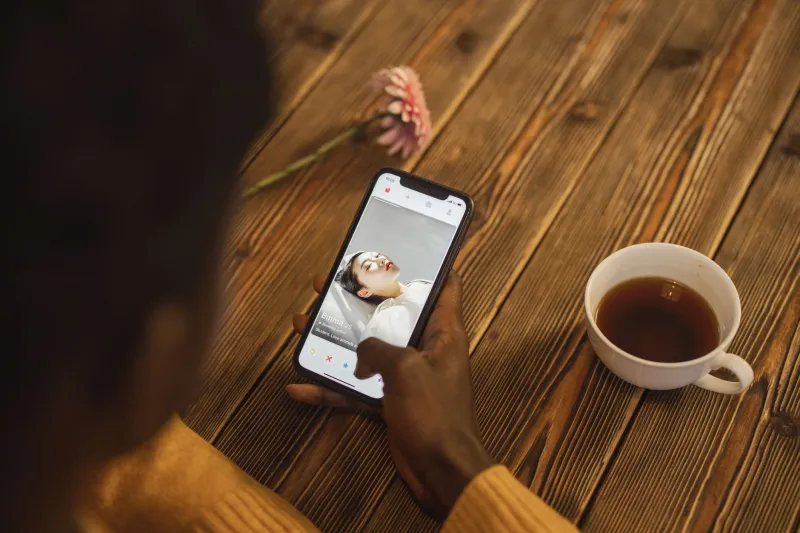
Let's be honest about how the war ended. The desktop computer—the humming tower, the chair you had to sit in, the whole ritual of it—lost. The phone won. And in winning, it quietly rewired not just where we watch adult content, but what we want from it.
Convenience is a hell of a drug. But like every drug, it changed the experience.
The Great Shrinking
Here's the thing nobody likes to admit: the screen got smaller and, somehow, so did our attention. Desktop-era adult content was built like cinema—long scenes, setups, narratives that took their sweet time. Mobile-era content is built like a snack. Vertical video. Clips measured in seconds. A feed that never ends and never asks you to commit.
The industry didn't shrink the content because audiences demanded it. It shrank the content because the device demanded it. A 45-minute scene doesn't make sense on a six-inch screen you're holding one-handed under a blanket. So we got 45-second clips instead, optimized for the scroll, engineered to hook you before your thumb gets bored.
And something got lost in the compression. Anticipation, for one. The slow build that made the payoff worth anything. When desire fits in a back pocket and loads in three seconds, there's no friction—and friction, inconveniently, is where a lot of the heat used to live.
Privacy Anxiety Changed the Product Too
The phone didn't just shrink the format. It shrank the sense of safety.
On a desktop, you had a bedroom and a door. On a phone, you have a lock screen, a nosy partner, a notification that pops up at the worst possible moment. The result? An entire ecosystem of anonymous browsing apps, incognito tabs, vault apps disguised as calculators, and platforms bragging about "discreet billing" on every checkout page.
That anxiety seeped into the content itself. Mobile-era adult material trends toward the anonymous, the faceless, the POV—formats where nobody has to feel seen watching them, and nobody in the video is asking to be recognized. It's desire with a witness-protection program built in.
What We're Actually Missing
Here's my argument, plainly: the phone made adult content easier to access and harder to enjoy.
The desktop era had friction—physical, logistical, temporal. You had to go somewhere. That friction created intention. You chose to watch something, sat down, and gave it your attention. The phone removed every barrier, and in doing so, removed the choice. Now it's a reflex. Thumb, scroll, tap, done, guilt, repeat.
And the guilt is the real tell. Surveys keep finding that mobile viewers report less satisfaction from the same amount of consumption. More content, less pleasure. It's the junk food problem wearing lingerie: infinite availability, diminishing returns.
Is There a Way Back?
Maybe. A quiet counter-movement is brewing—paid platforms with curated, cinematic content; creators building slow, subscription-based experiences instead of algorithm-chasing clips; even a mini-renaissance of "watch it on the big screen" among couples who want adult content to be an event rather than a reflex.
The lesson isn't to throw your phone in the river. It's to recognize that the device shapes the desire. If your entire erotic life lives in a vertical feed between 15-second clips, maybe the problem isn't your libido. Maybe it's your screen.
The phone killed the desktop. Fine. But don't let it kill the mood entirely. Some things are worth sitting down for.